

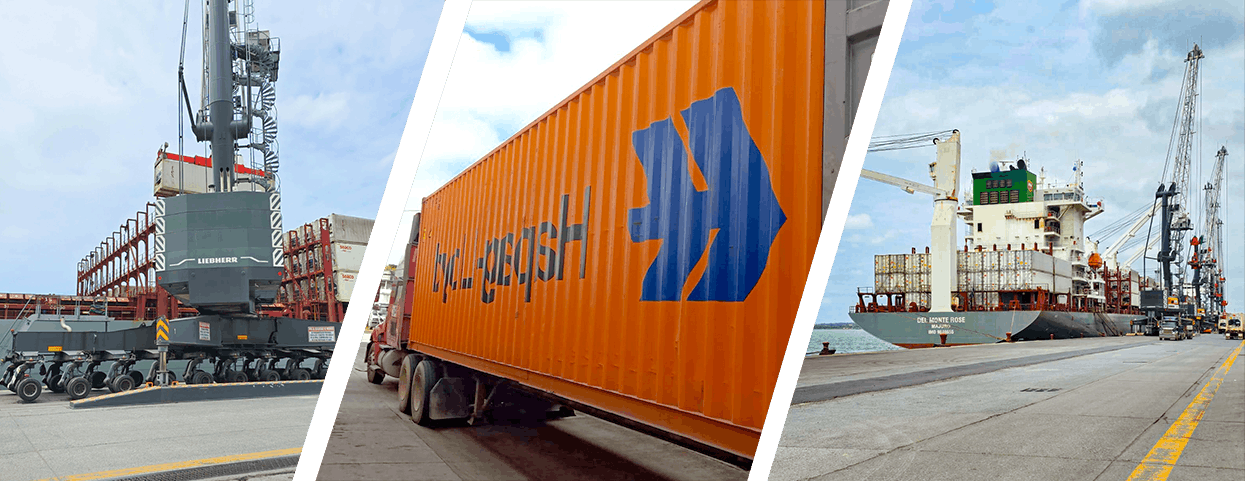
Guatemala’s new General Law on the National Port System seeks to modernize the country’s ports, strengthen regulatory oversight, and improve the efficiency of operations related to foreign trade.
What does this mean for companies involved in importing and exporting?
The port system is a fundamental part of the logistics chain for any company engaged in international trade. Port delays, insufficient infrastructure, or inefficient management can quickly lead to higher costs, delivery delays, inventory issues, and reduced competitiveness.
With the approval of Decree 20-2026, General Law on the National Port System, Guatemala establishes a new legal framework to organize, regulate, plan, develop, administer, and oversee the National Port System.
The law was approved on August 5, 2026, published in the Official Gazette on September 2, and will enter into force on October 2, 2026.
For years, delays and infrastructure limitations at Guatemala’s ports have represented a significant challenge for foreign trade.
For businesses, the consequences can extend far beyond transportation itself.
A port delay can affect:
Inventory availability
Customer delivery dates
Production schedules
Storage costs
Demurrage and delay charges
Profit margins
One of the most significant changes is the creation of the National Port Authority (APN) as an autonomous and decentralized entity.
The APN will be responsible for regulation, planning, oversight, inspection, and enforcement within the National Port System.
The new structure aims to establish greater coordination among the institutions involved in port activities while providing clearer definitions of the responsibilities of the different stakeholders within the system.
The overall objective is to move toward a port system that is:
More efficient + Safer + More competitive + Better planned
The answer will become clearer as the new regulations take effect and their various mechanisms are implemented.
For this reason, anticipating changes, monitoring regulatory developments, and having an effective logistics plan will be essential.
At SAL Logistics, we believe that a successful logistics operation begins long before a container reaches the port.
That is why we analyze every shipment based on costs, transit times, routes, cargo type, commercial terms, and your company’s specific requirements, helping you make better-informed decisions.
Let SAL Logistics help you plan your next international shipment and evaluate the factors that may affect the cost and arrival time of your cargo.
Transforming Logistics into Results.